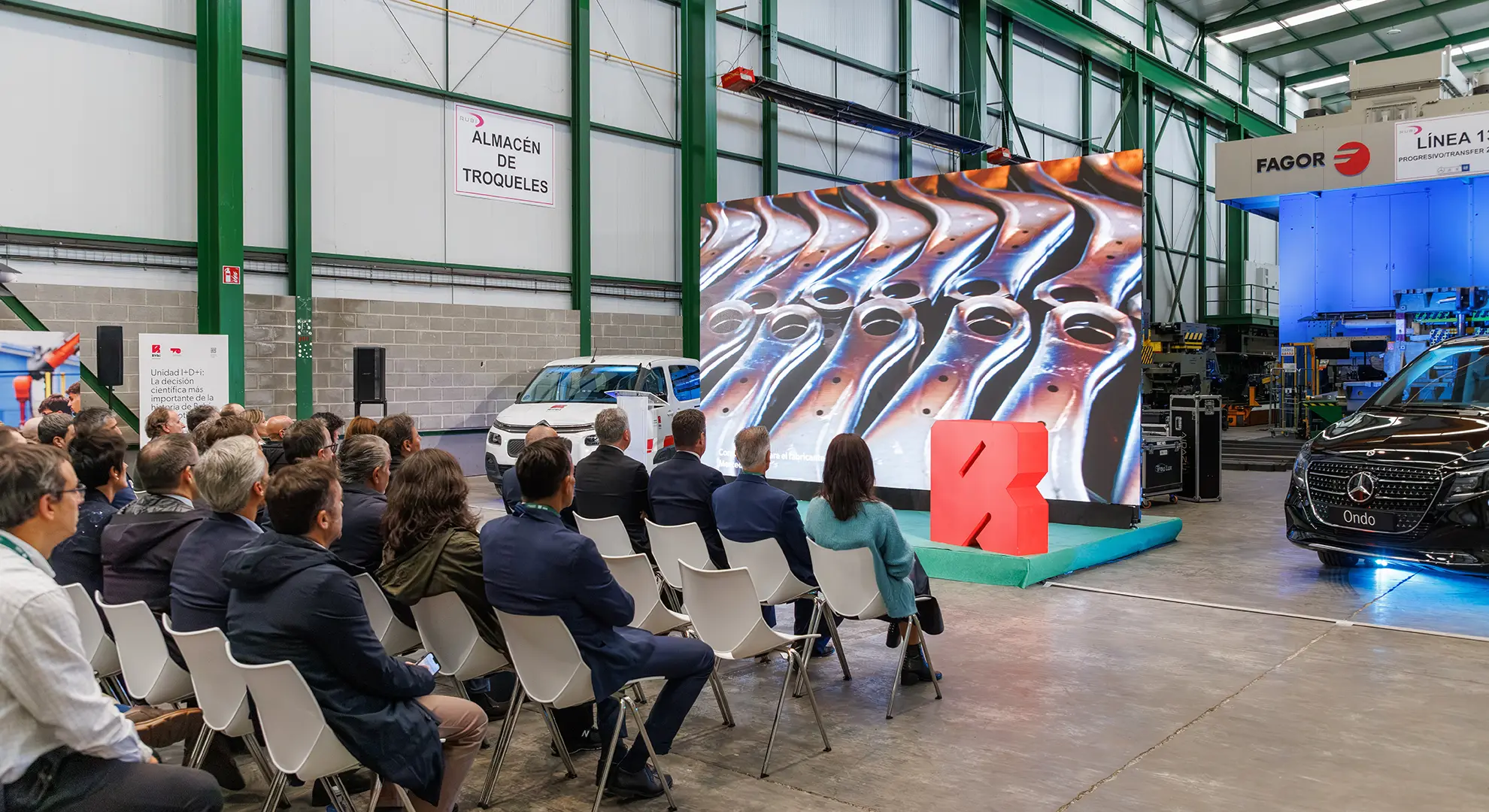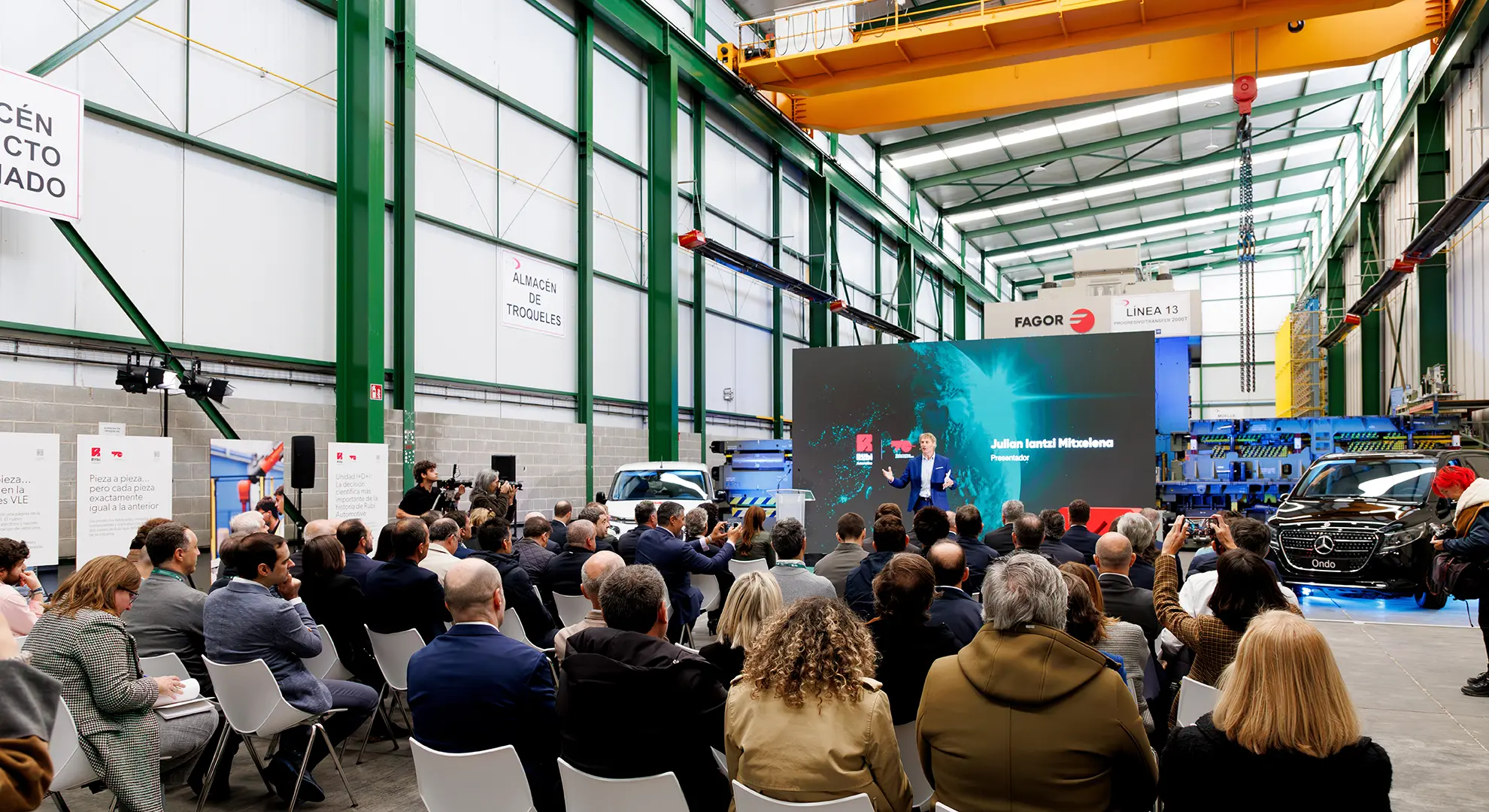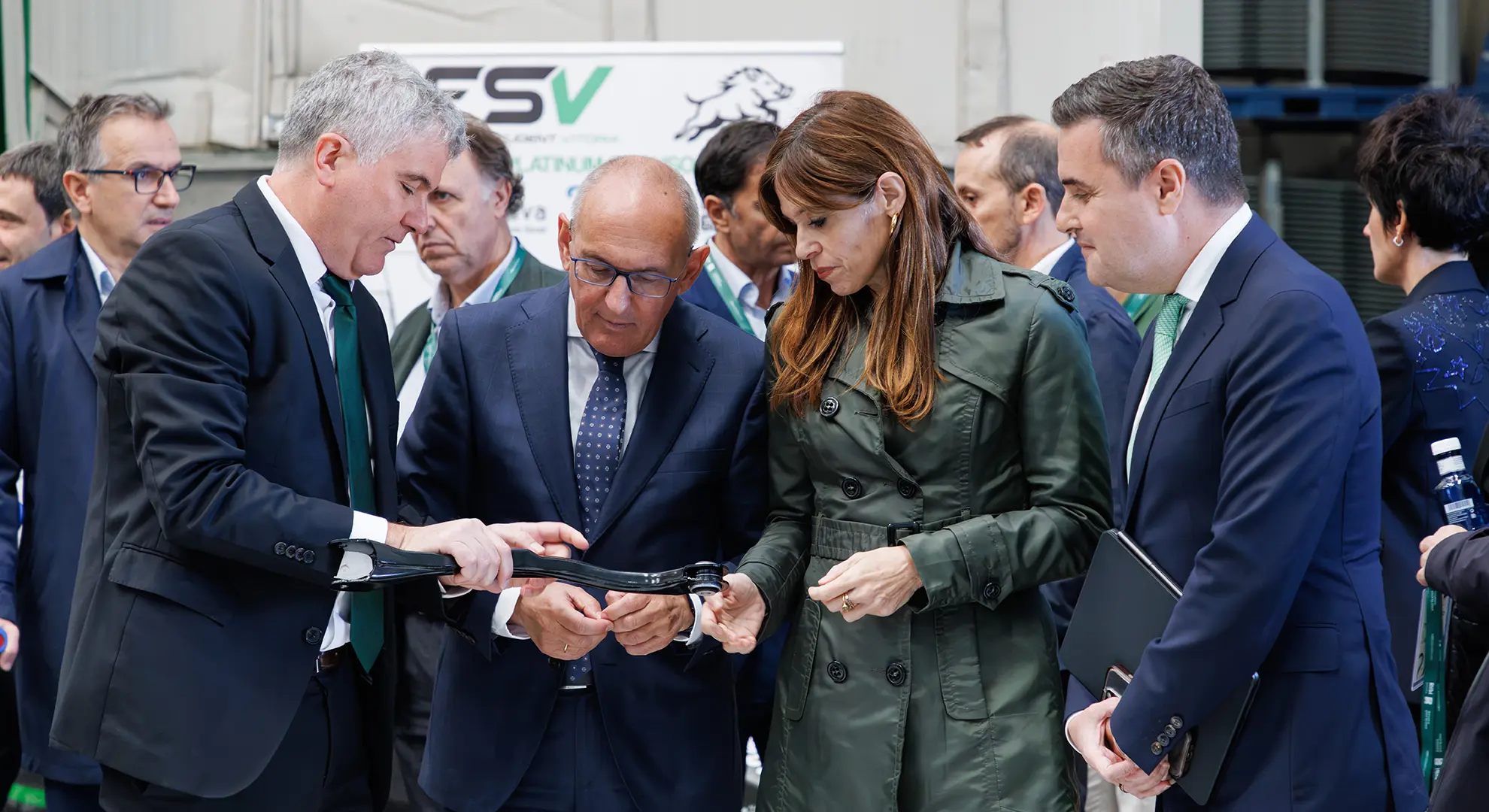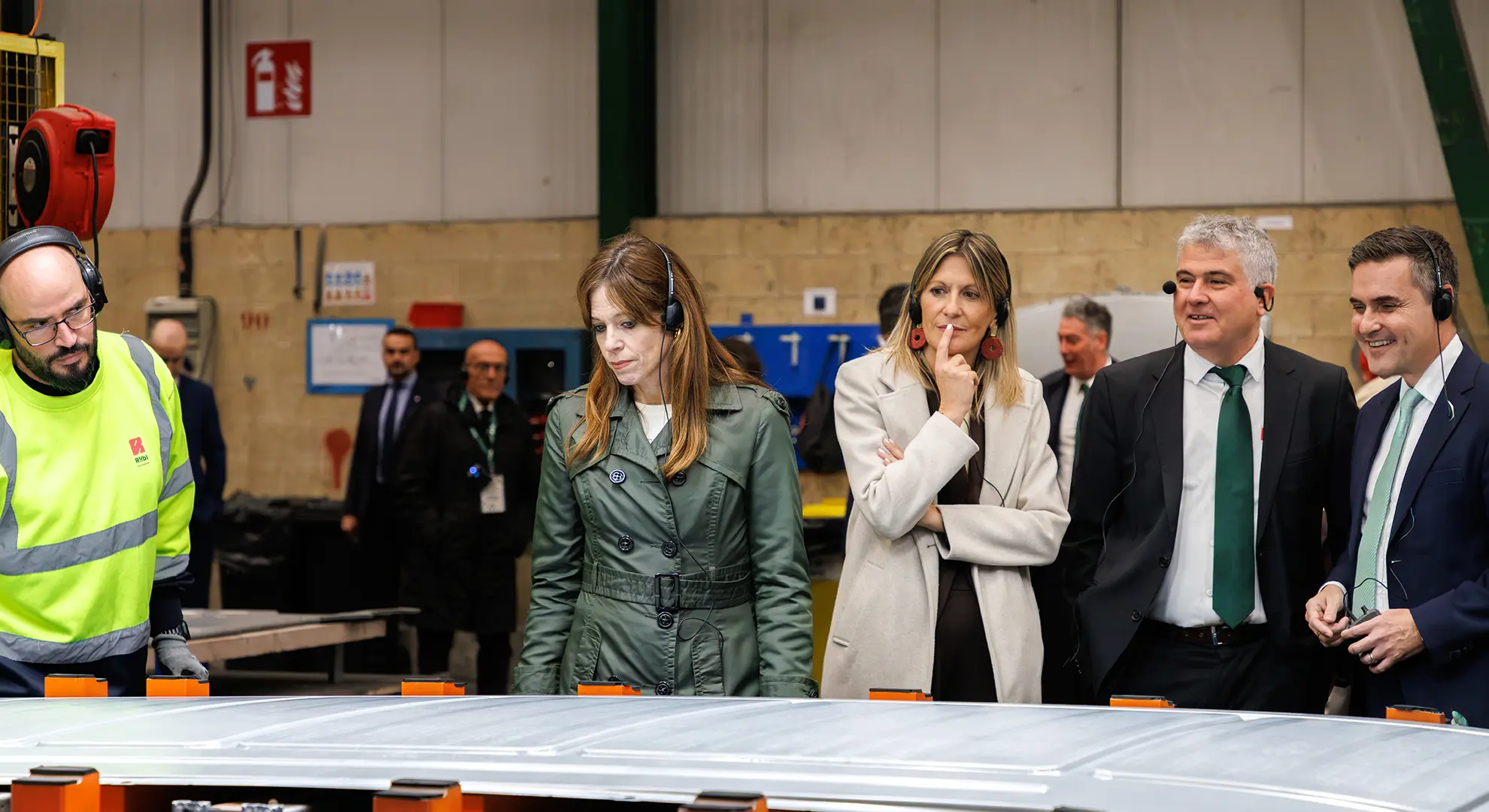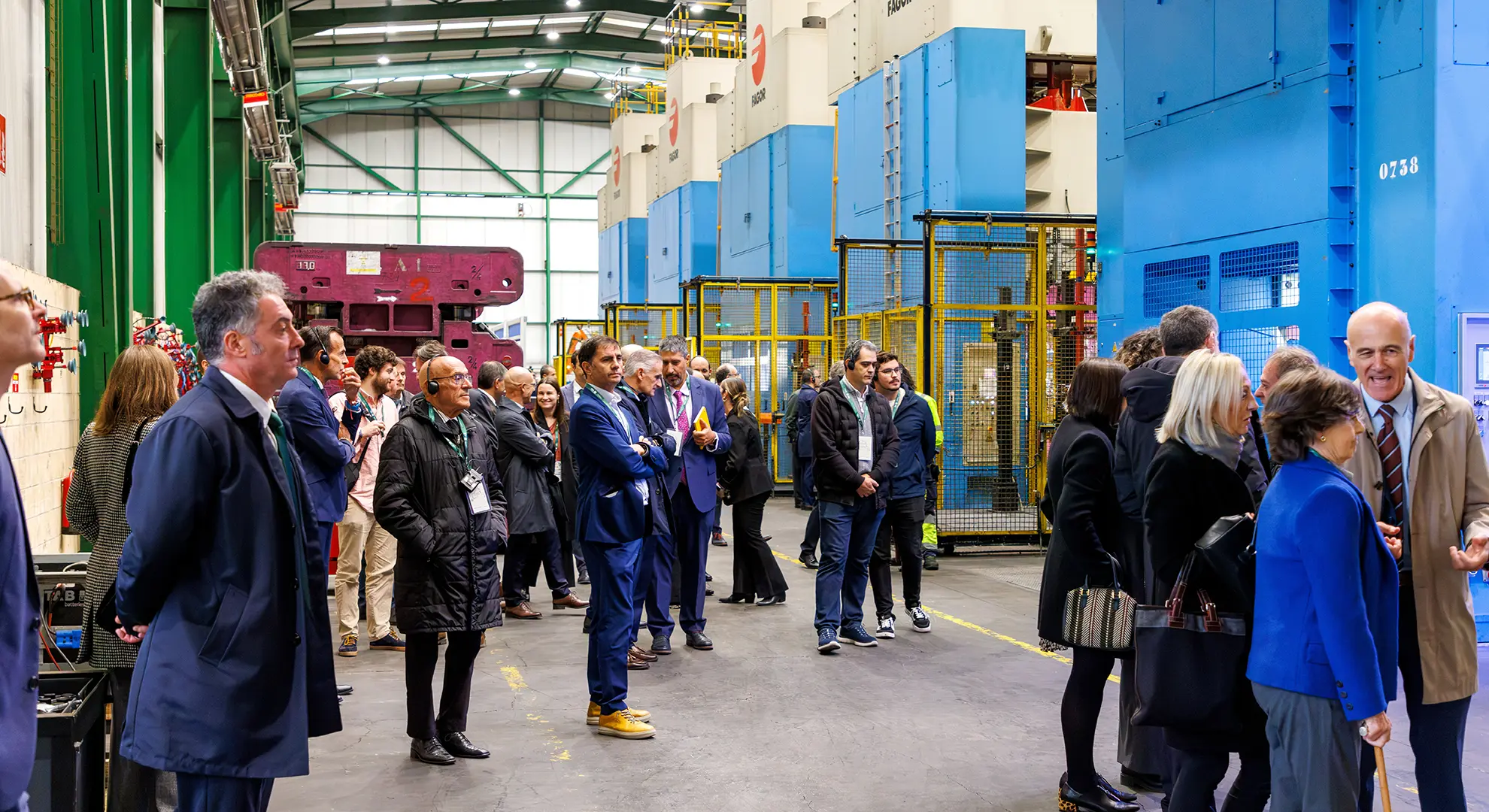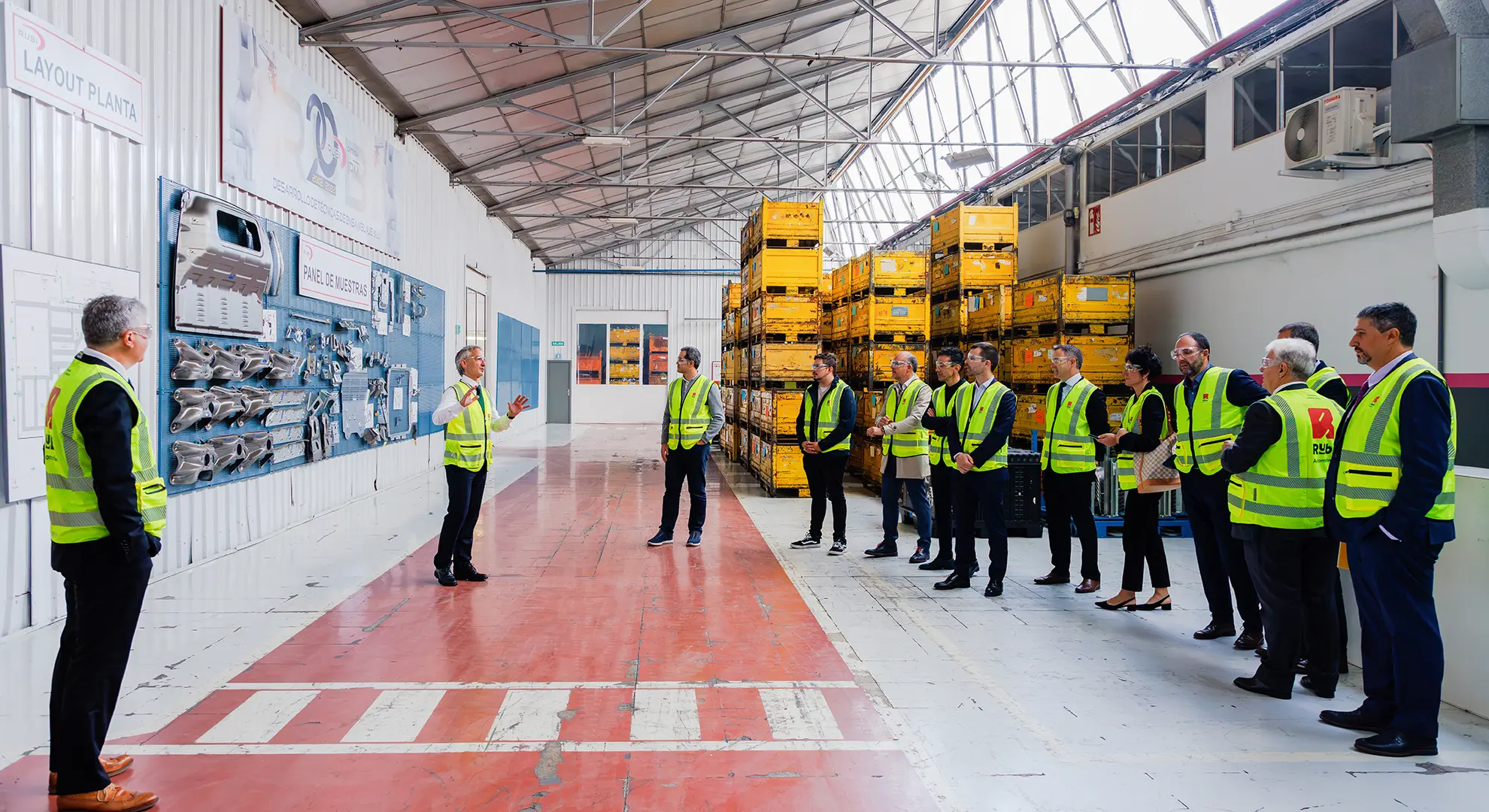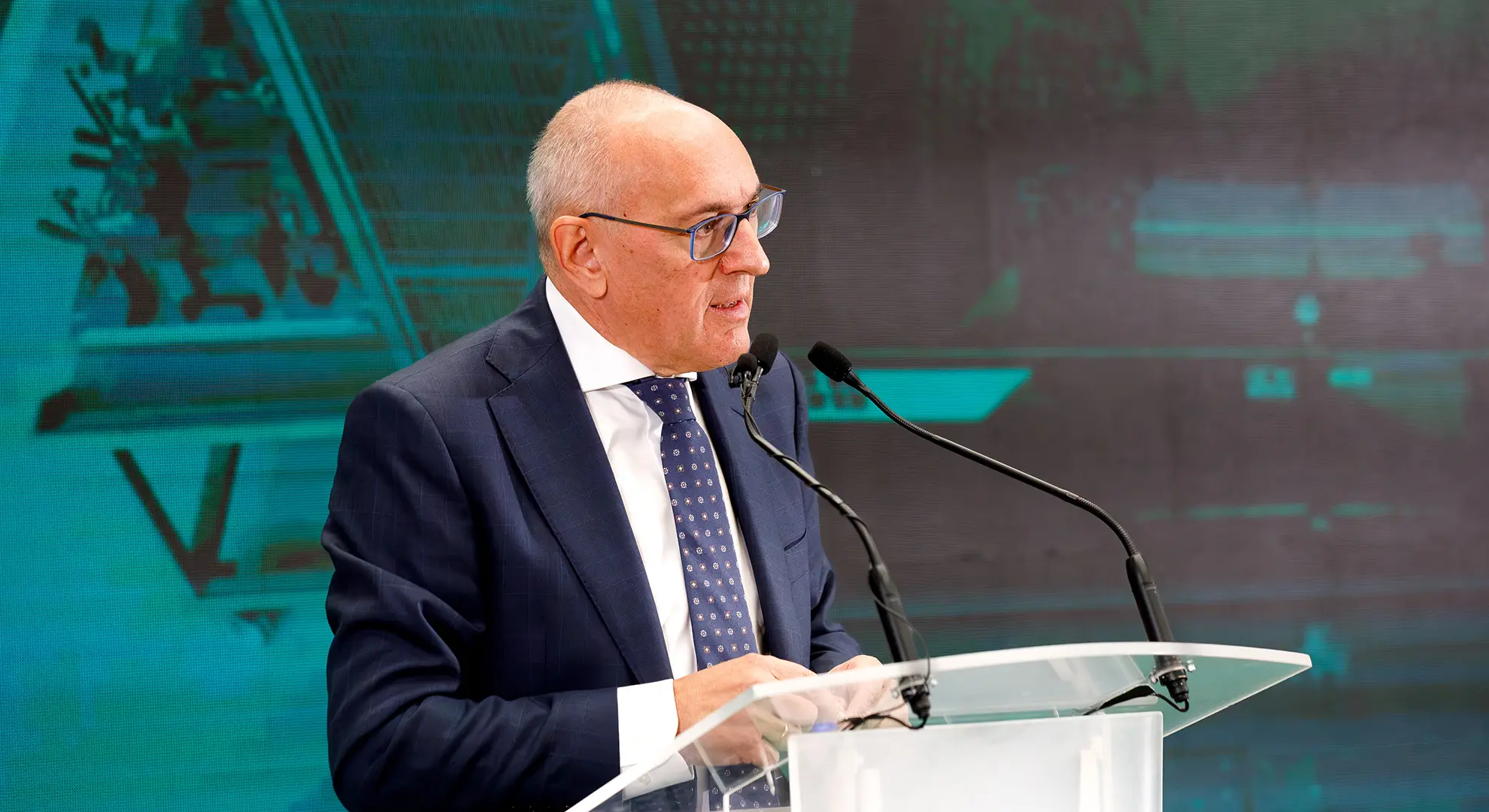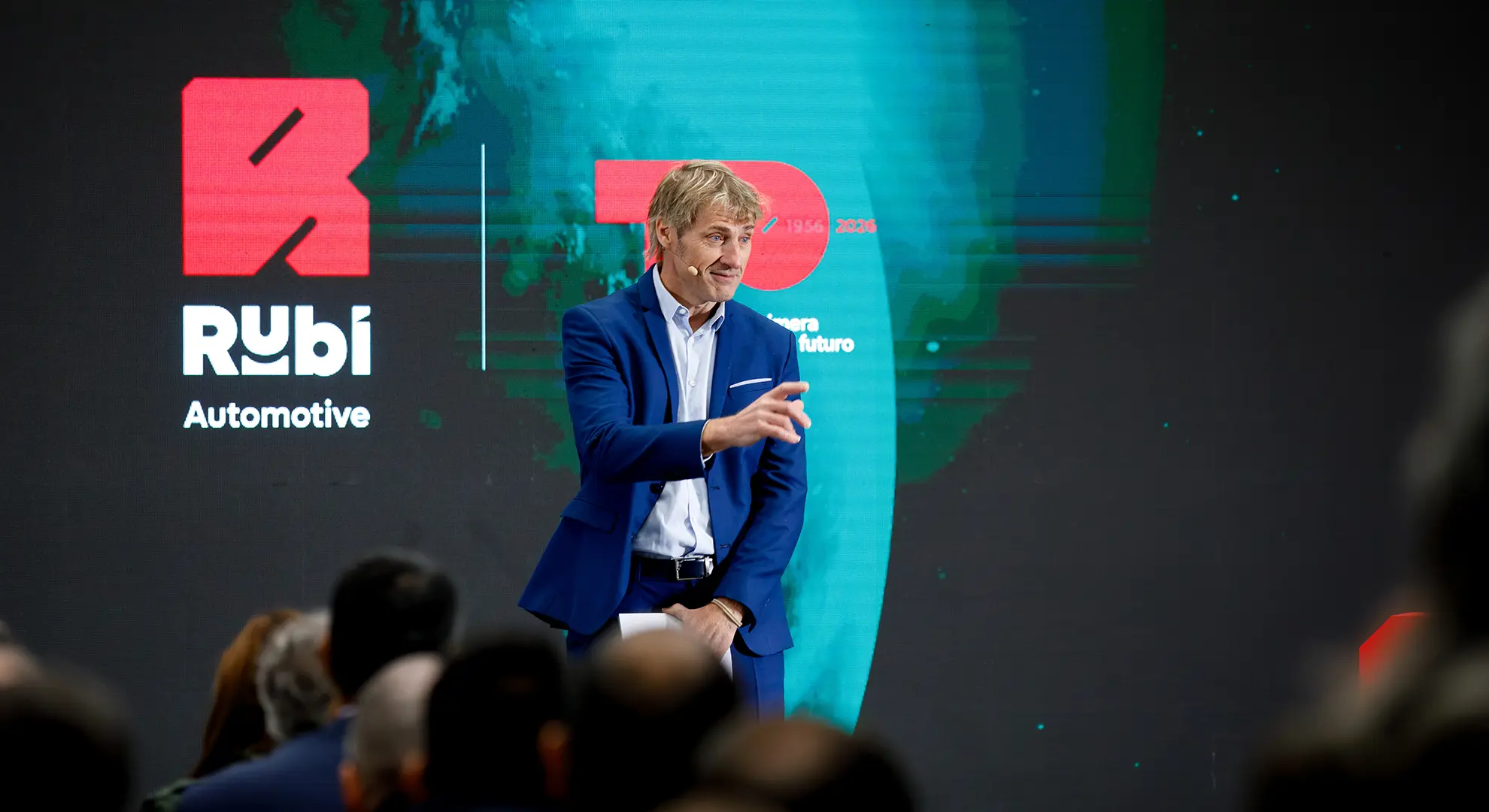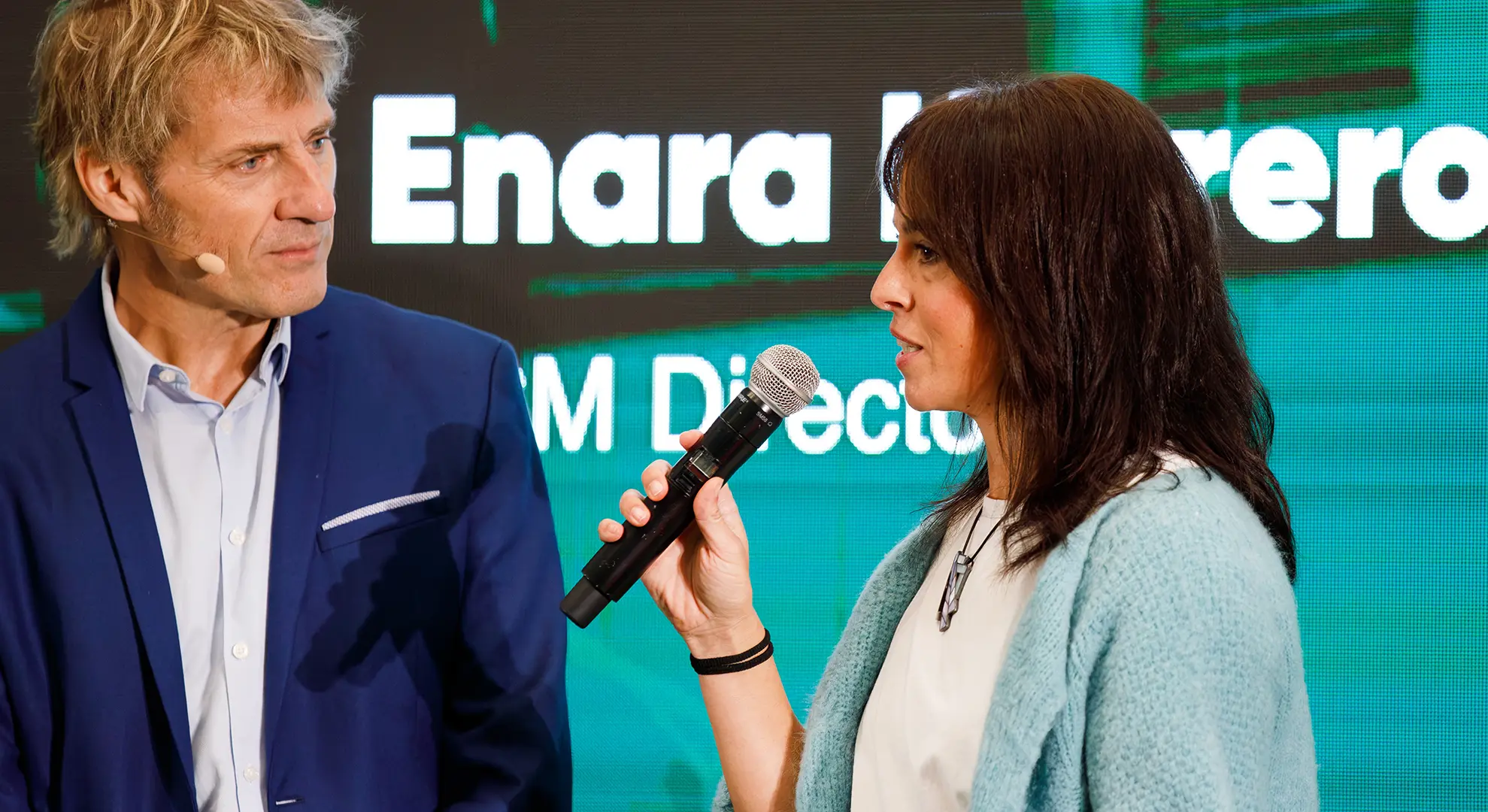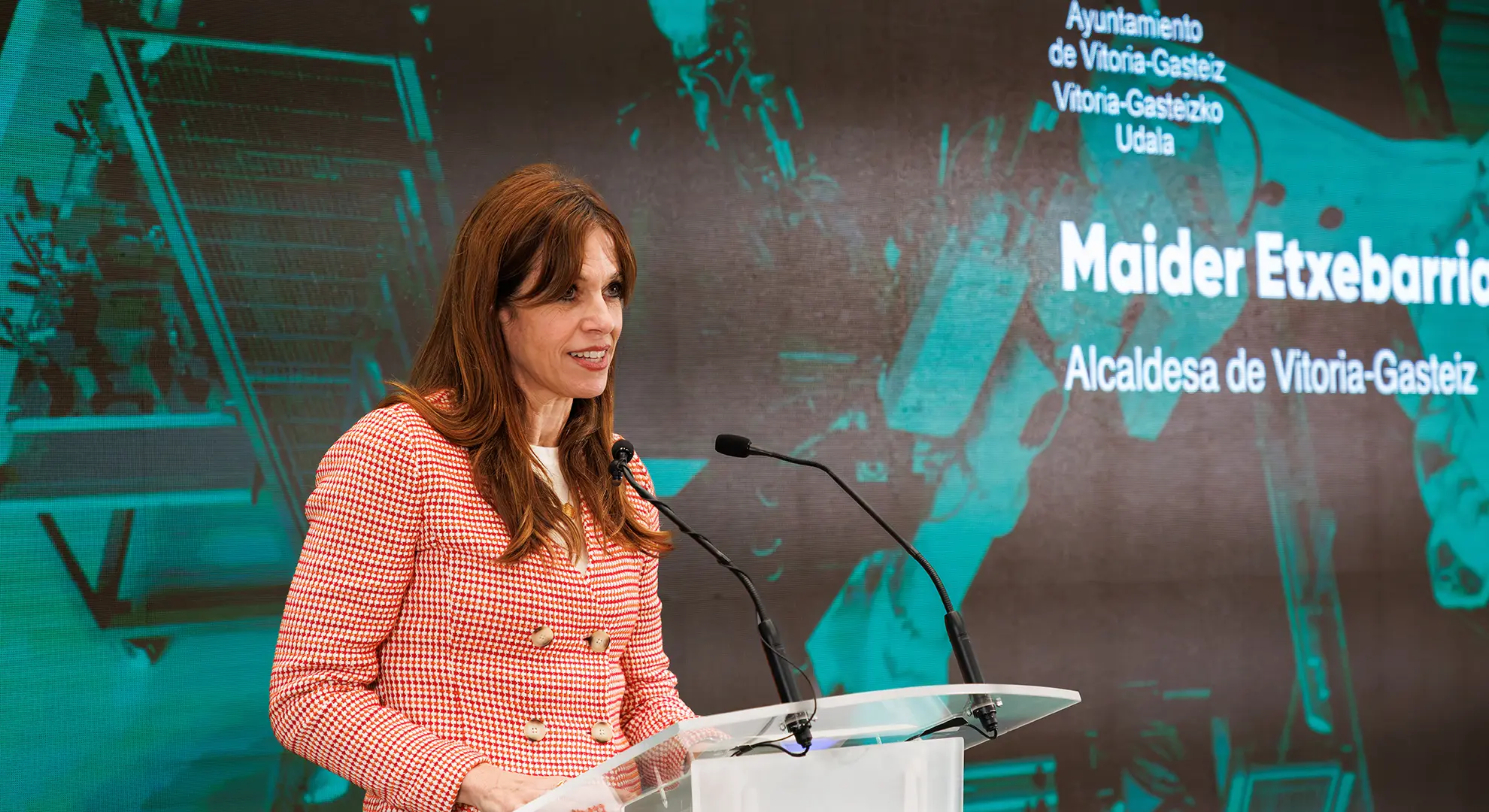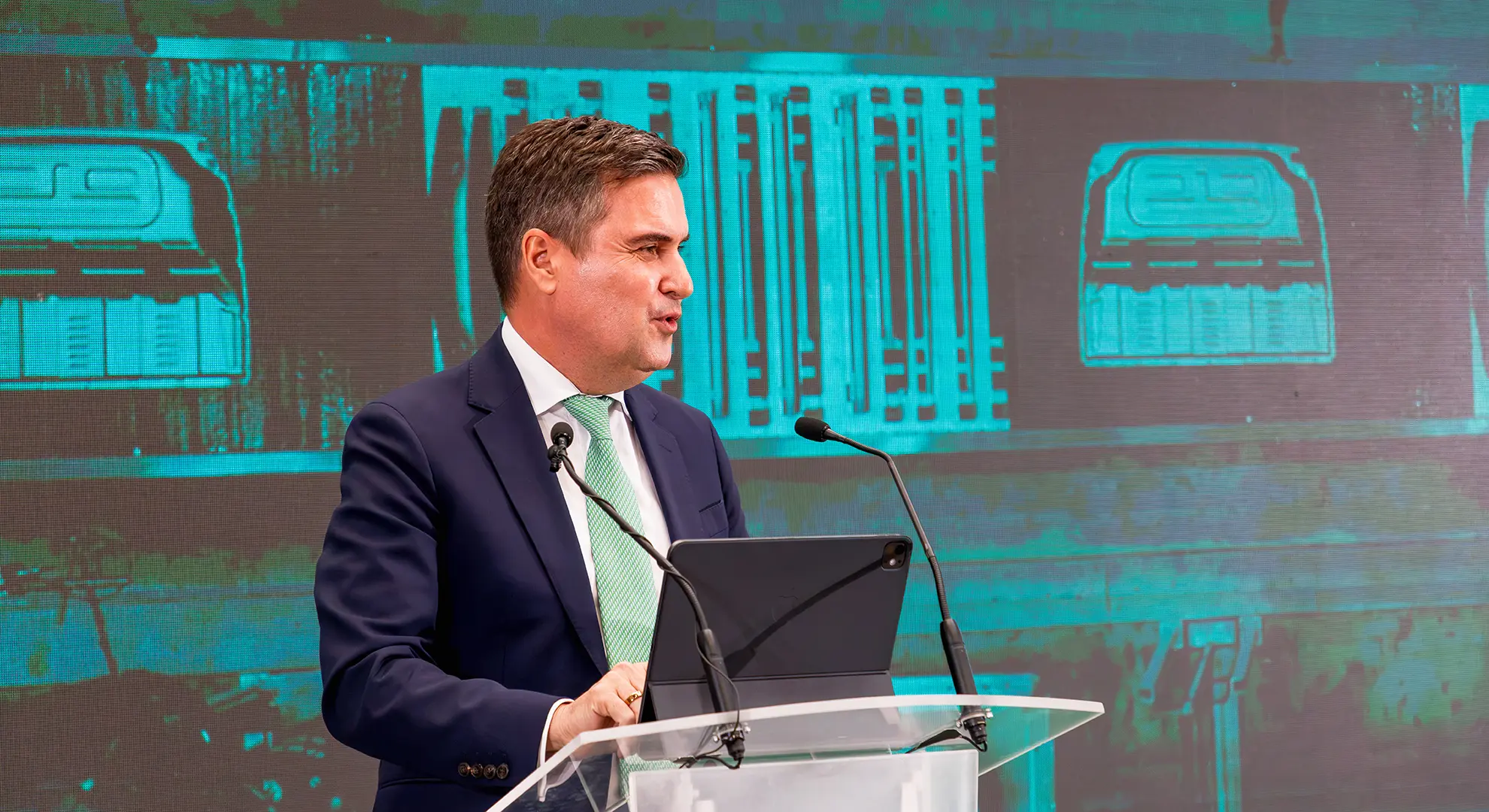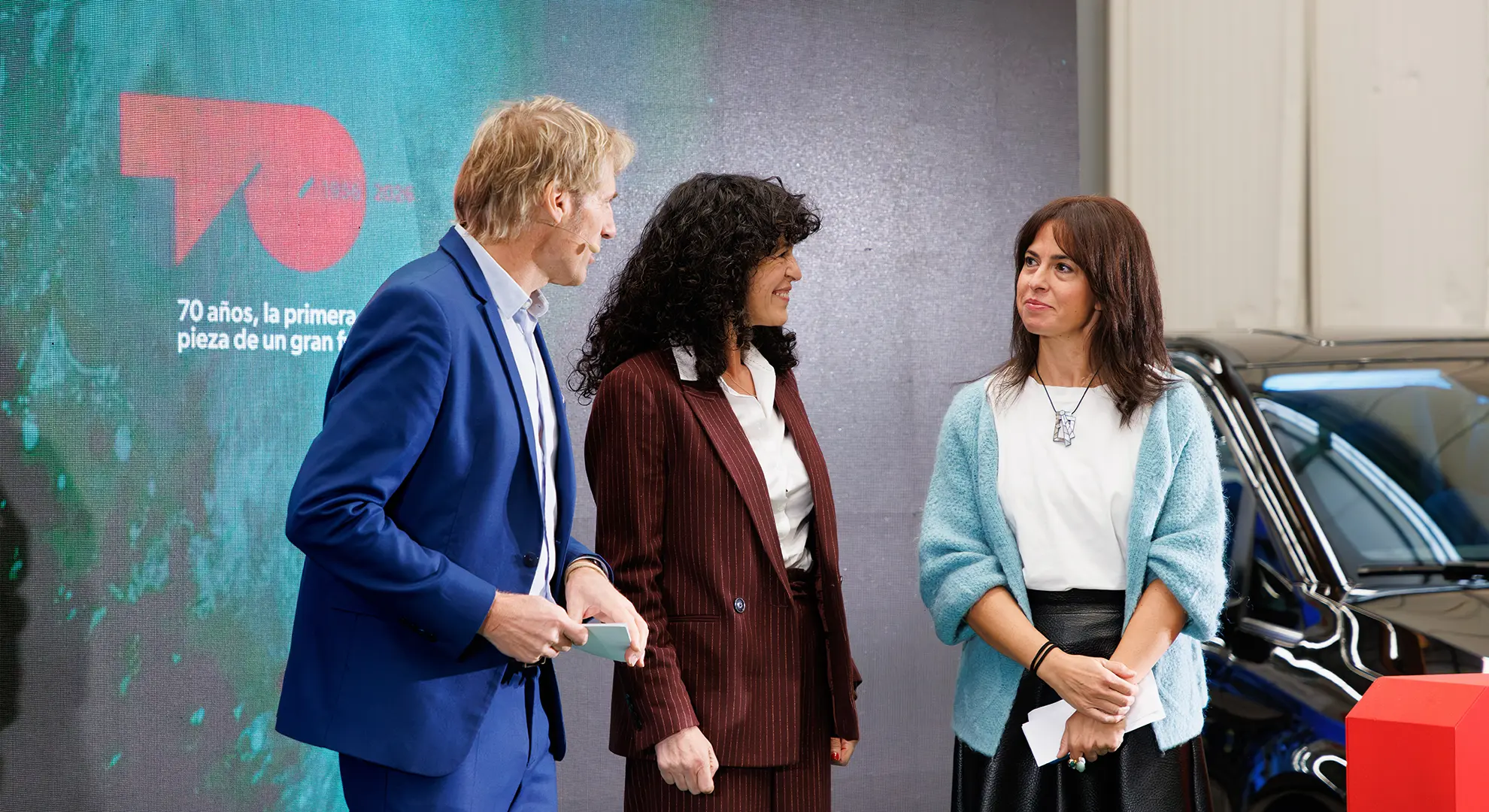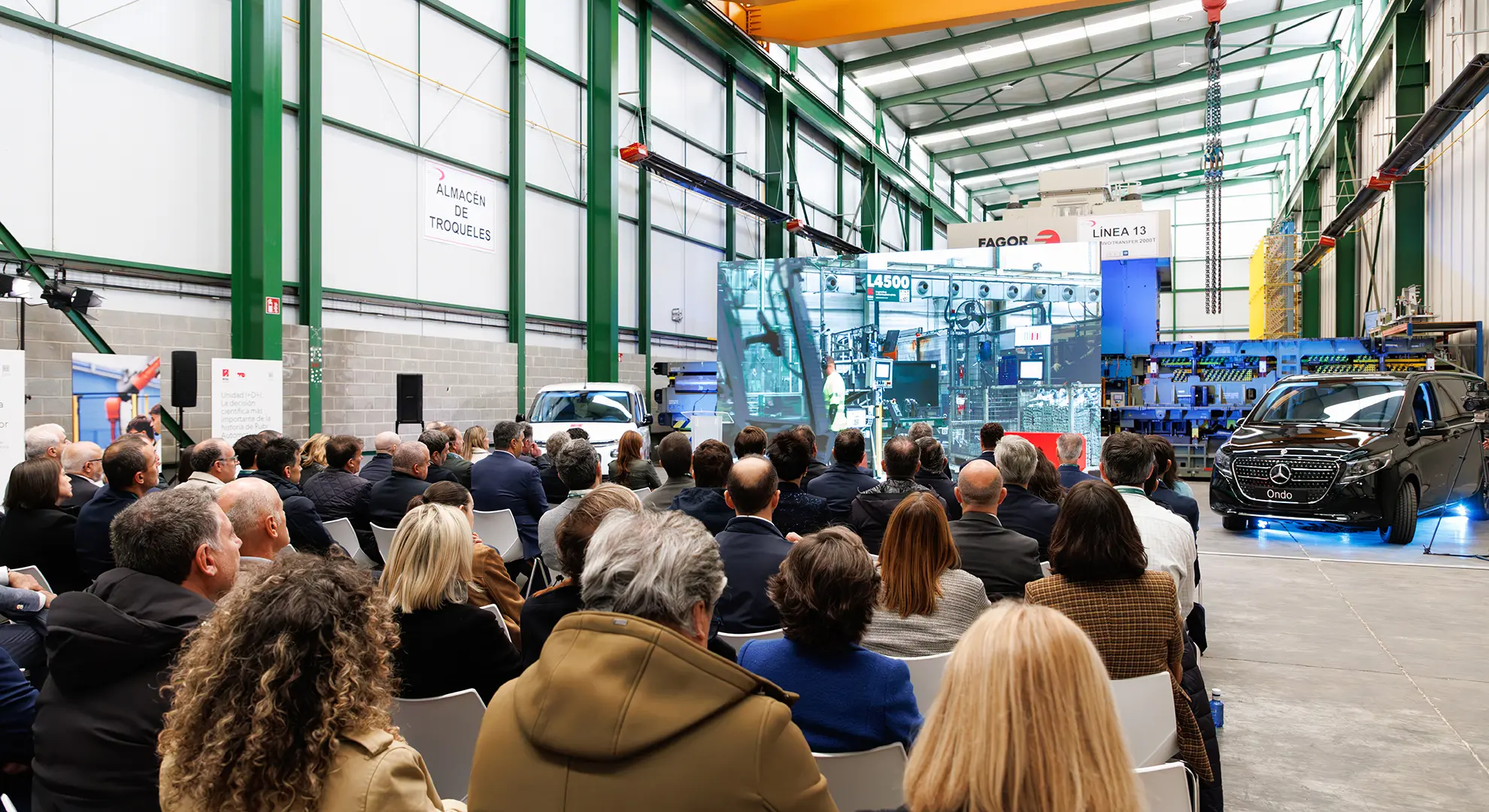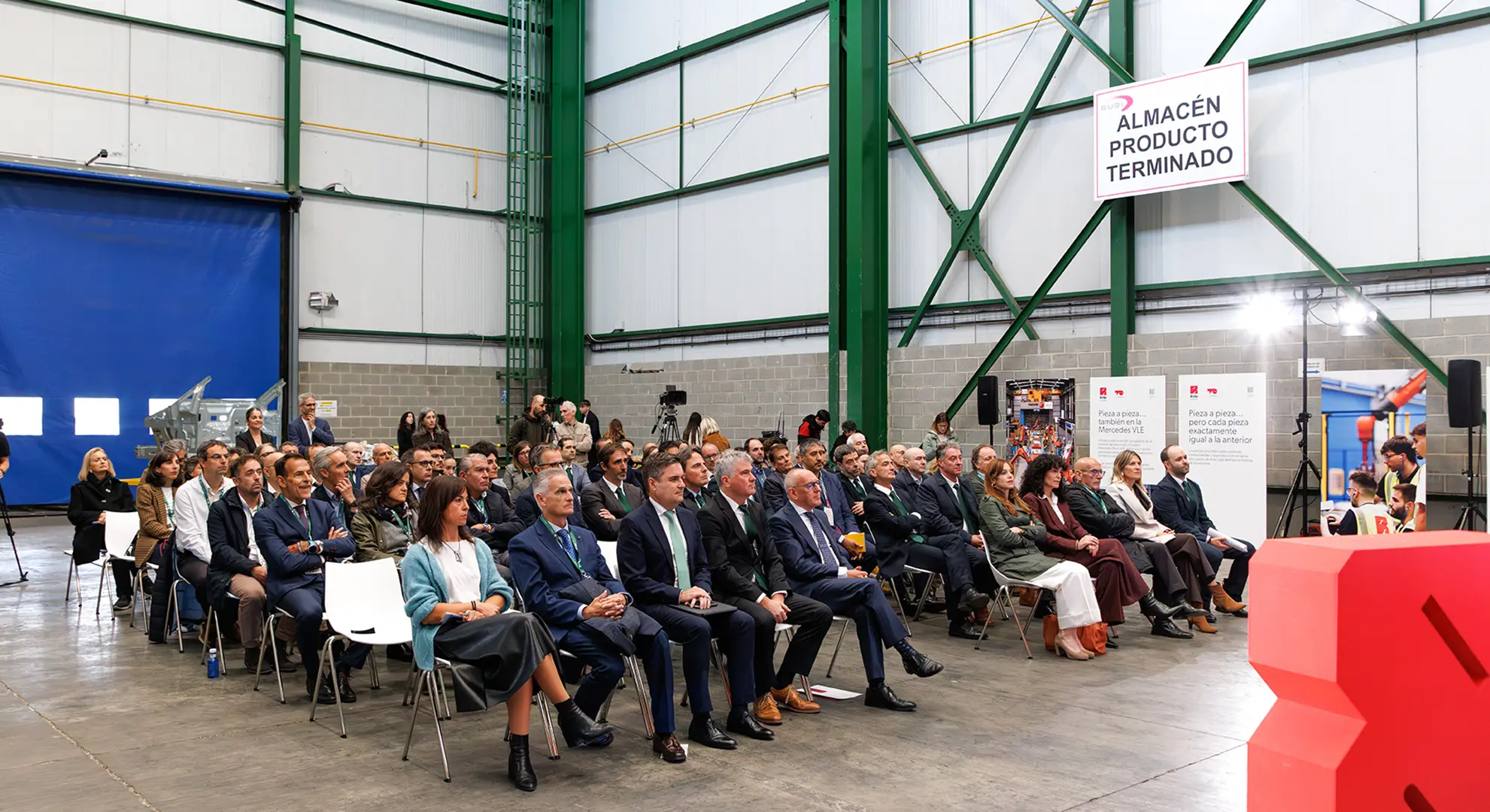

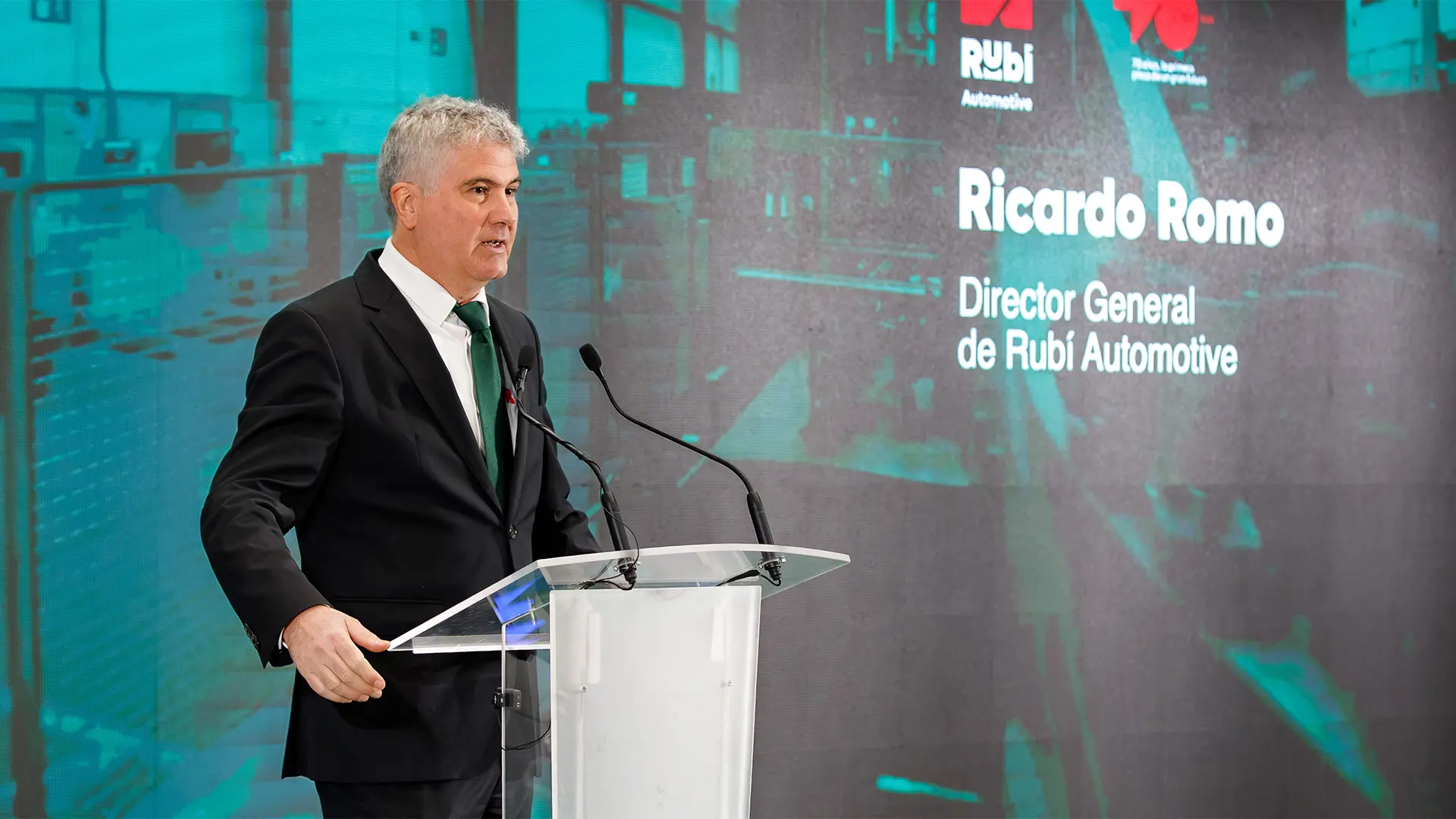
21 October, Vitoria-Gasteiz.– Reaching 70 years in the European automotive industry is a rare achievement, but doing so whilst announcing a future of growth in production and employment is an exception, particularly if those assurances are underpinned by a commitment to continue keeping the bulk of the business and jobs within the country. This morning, Rubí Automotive’s strong performance was celebrated with a special event at its headquarters in Vitoria-Gasteiz, attended by institutional representatives and executives from the company’s main clients and suppliers. The company specialises in manufacturing parts and components for the automotive sector. The company’s managing director, Ricardo Romo, was accompanied by several of his senior executives to outline the group’s plans for the future.
In addition to its business plans, the company’s management presented its new corporate identity, designed to establish a foothold in the global market and underpin its Strategic Plan up to 2031 – an ambitious programme to which it has allocated investments exceeding one hundred million euros. Rubí Automotive’s network of factories is implementing state-of-the-art automation, digitising processes and establishing machine vision systems that enable production to be optimised in real time. It is worth noting that the Álava-based firm has, for several months now, had its own research centre, through which it adapts the latest technologies to the needs of the automotive sector.

The Strategic Plan includes investments of over one hundred million in new technologies such as computer vision and automation
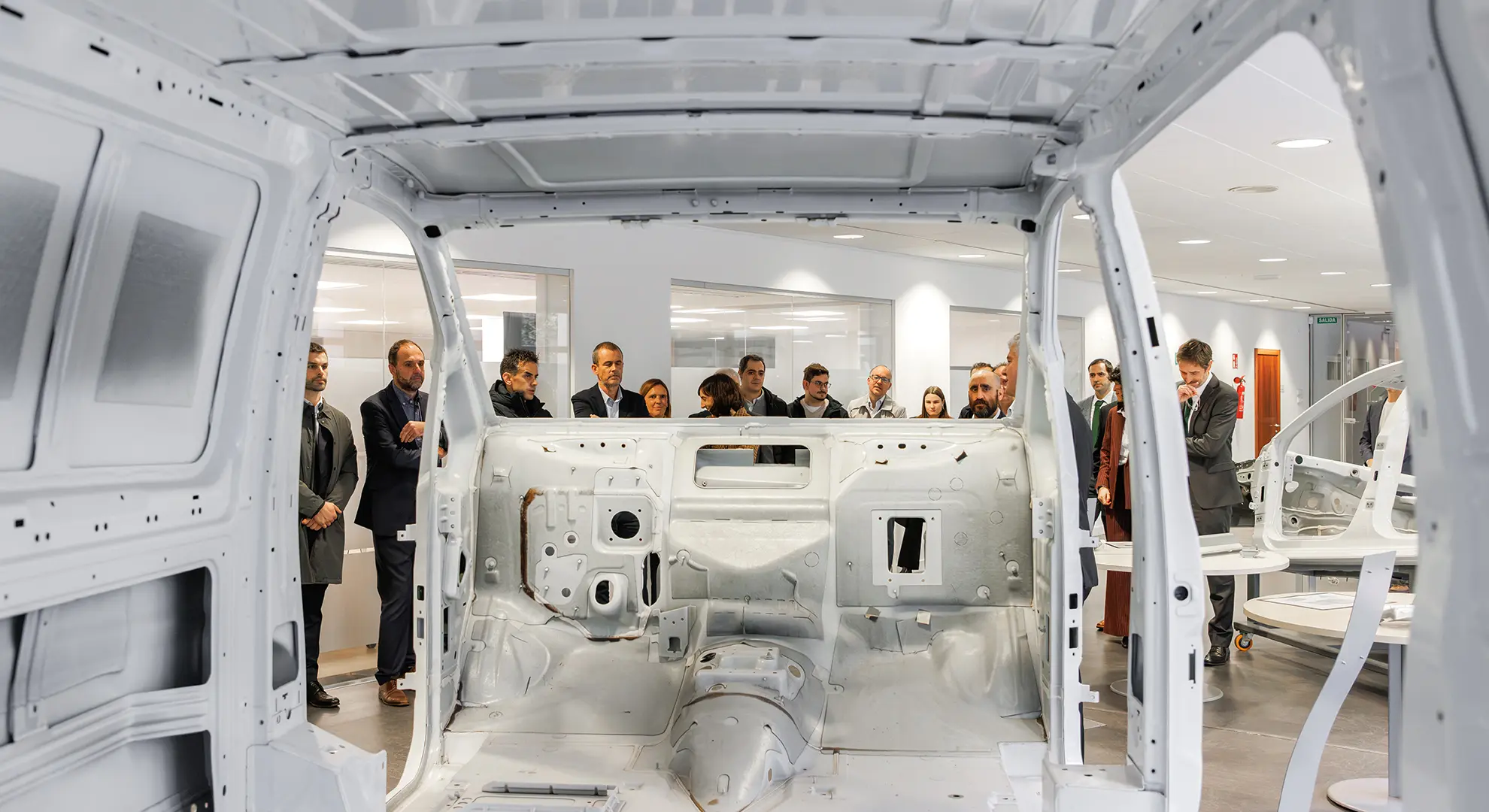
In purely commercial terms, the company formalised the agreements it had signed with Mercedes and Stellantis regarding their electric platforms. In the case of the German giant, Rubí Automotive has secured a contract to produce 201 units of the brand-new VLE van – the so-called ‘minivan limousine’ set to revolutionise high-end passenger transport – as well as the range intended for commercial use. Mercedes itself has spent four years preparing its factory in Vitoria-Gasteiz for this cutting-edge model.
As regards Stellantis, Rubí will be a supplier to the giant’s plants in Vigo and Zaragoza as part of the STLA One project, in which the Rubí Automotive factory in Galicia will play a leading role. At that same factory, in Ribadavia-Ourense, a state-of-the-art profiling line is being installed, capable of processing bodywork components made from high-strength steel. As for Volkswagen, the Álava-based company has already secured a smaller contract for its electric platform.

At the most challenging time in the sector’s history in Europe, the Álava-based firm is securing long-term contracts with industry giants Mercedes, Stellantis and Volkswagen
It so happens that these announcements come at the most challenging time for the European automotive sector since the steam engine cemented the First Industrial Revolution. This is the first time in the history of modern industry that the continent has been overtaken by new emerging powers which will undoubtedly lead the global economy. Added to this is the uncertainty surrounding Europe’s electrification process and the continent’s legal restrictions, which are more stringent and complex than those in third countries.
The Strategic Plan, the most ambitious in decades, is underpinned by the company’s own innovation centre, which is designed to diversify its product range into other mobility-related niches. Although Rubí Automotive’s philosophy is to keep the bulk of its production at its plants in the Basque Country and Galicia, plans for expansion into Central Europe and North Africa are also at an advanced stage, where major suppliers in the sector – particularly those involved in electric mobility – are establishing a strong presence.